


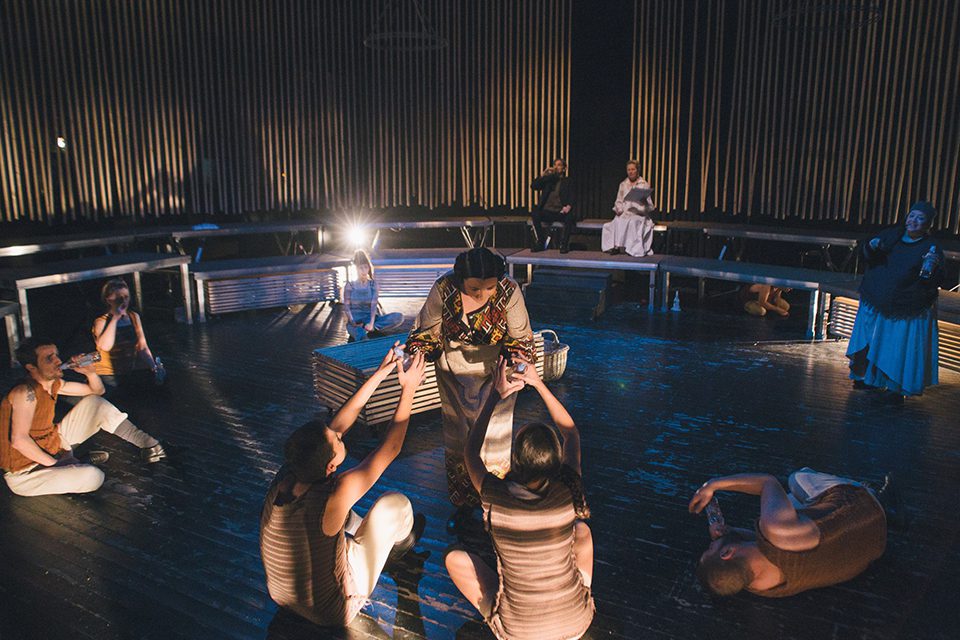
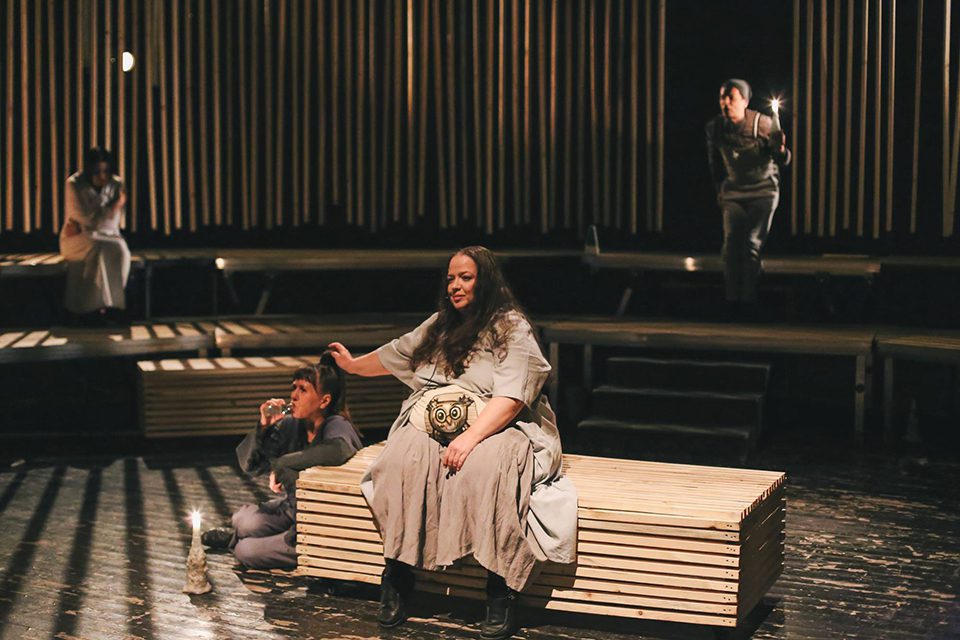
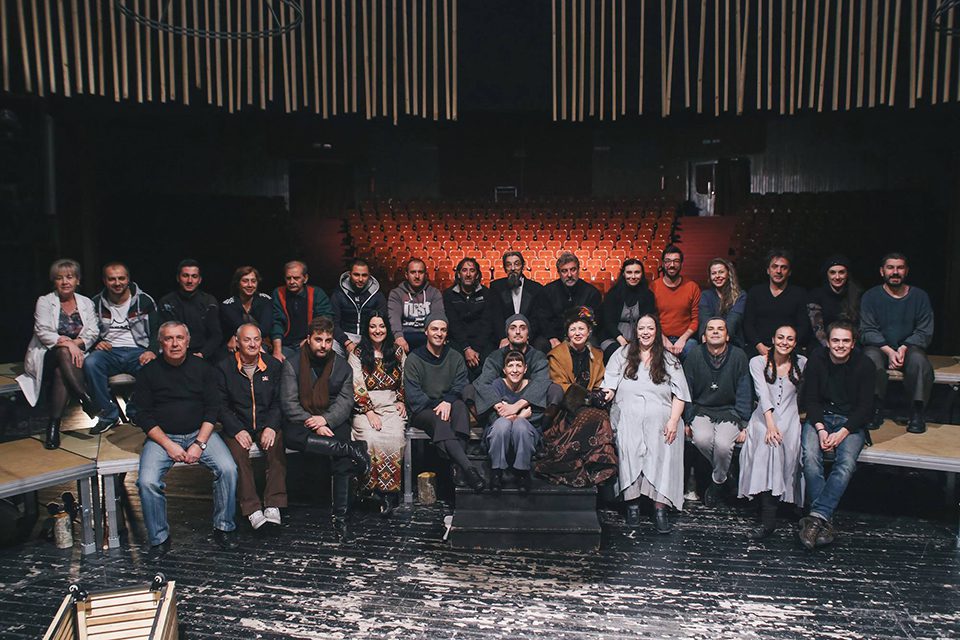
ELKA TREE NEAR IVANOVI
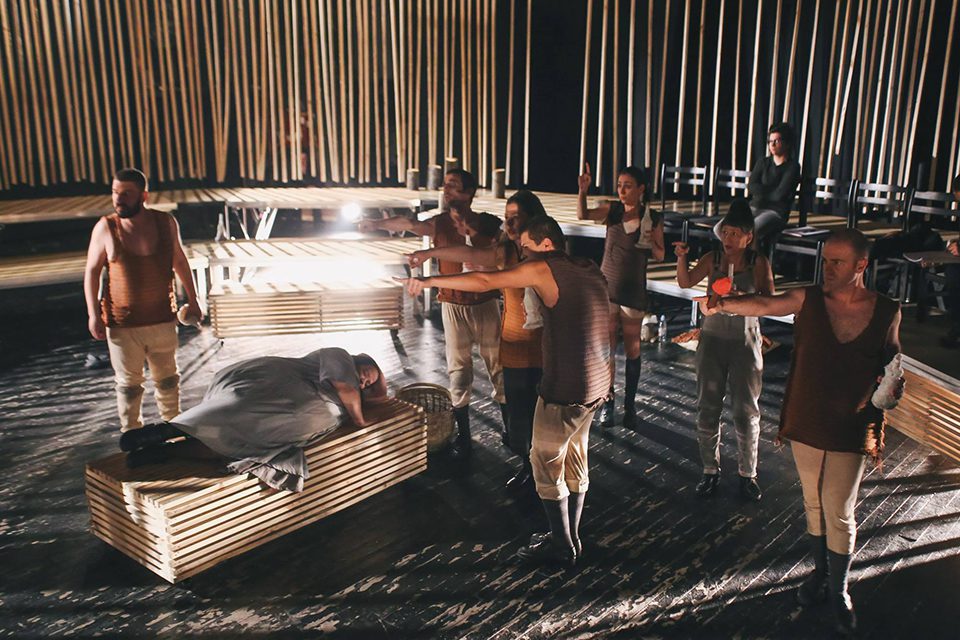
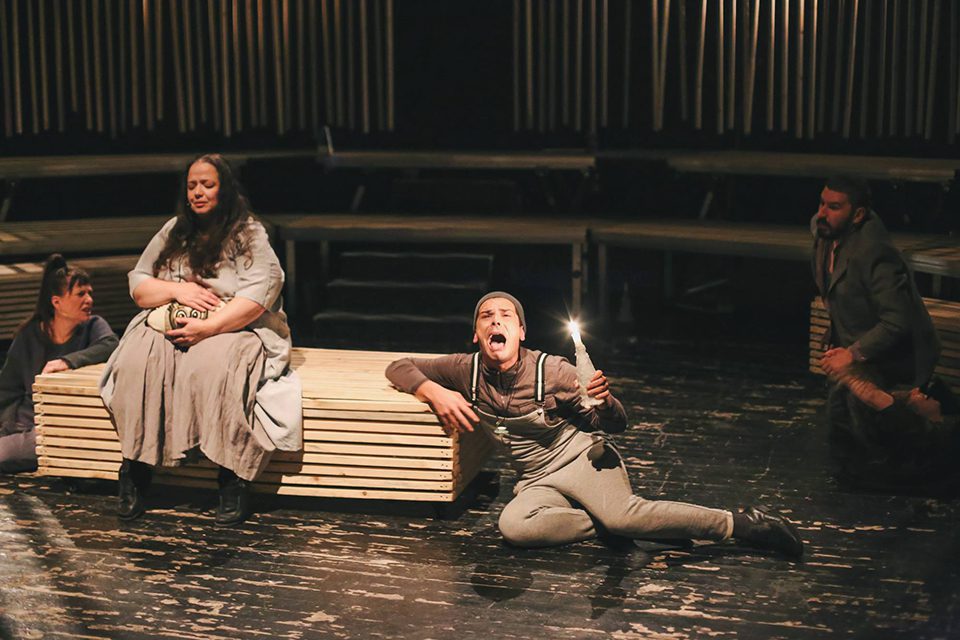
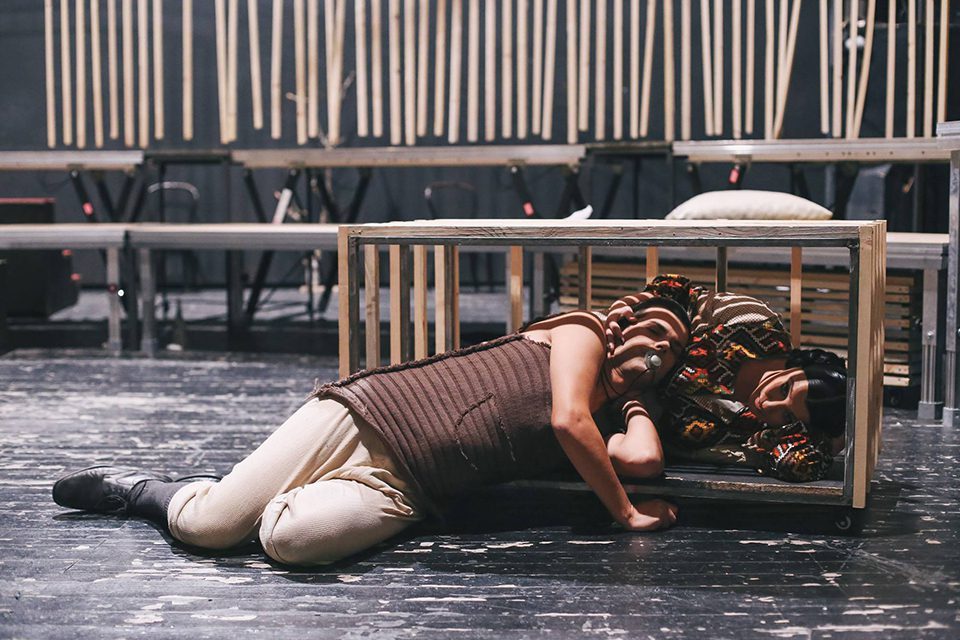

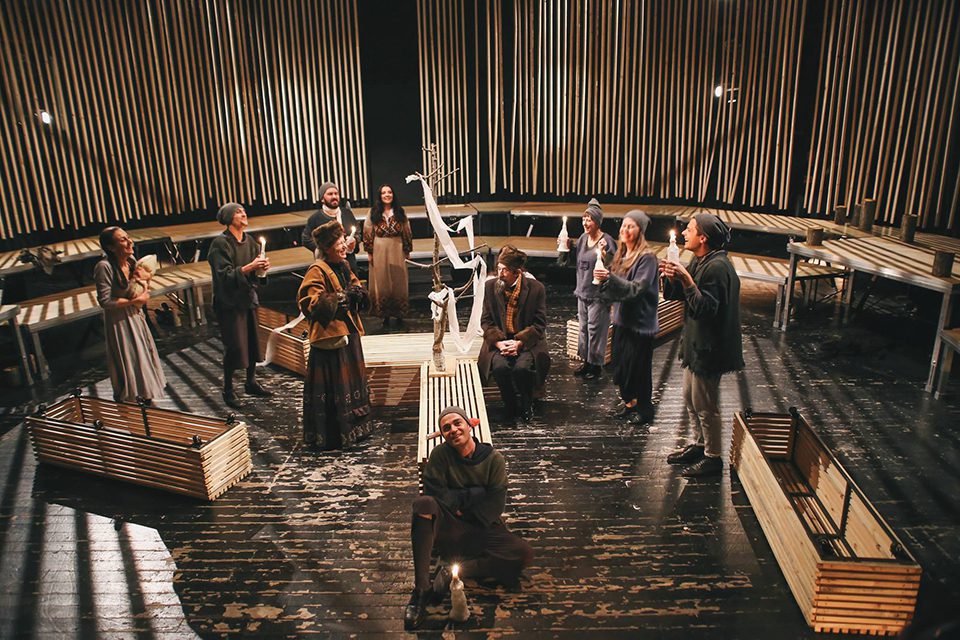


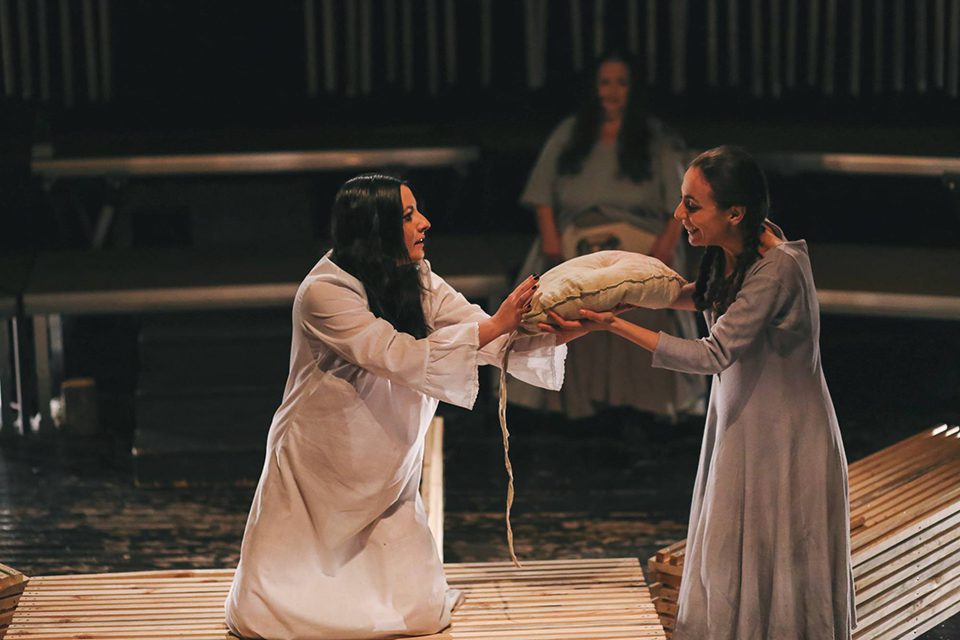
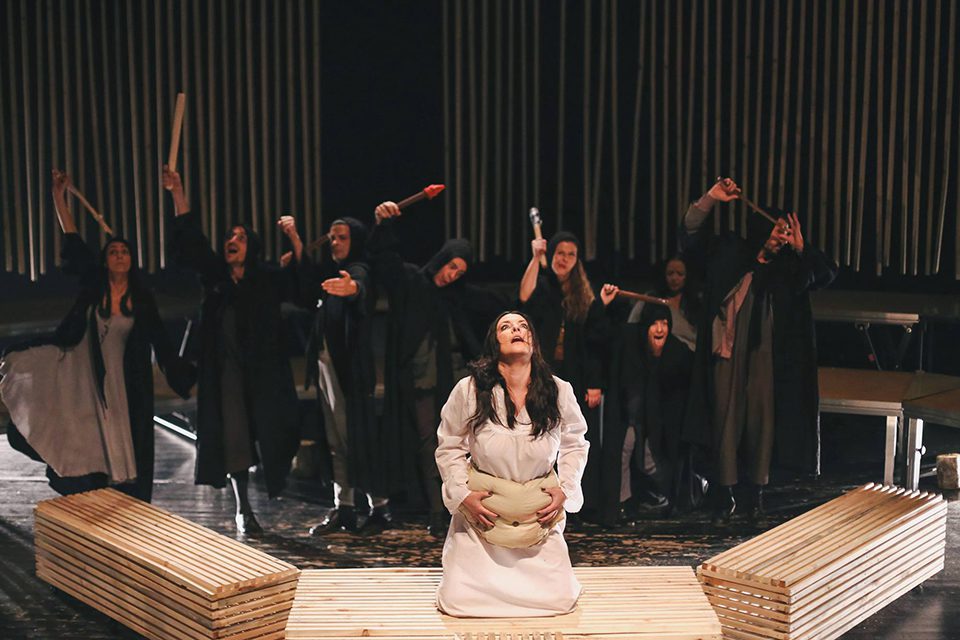
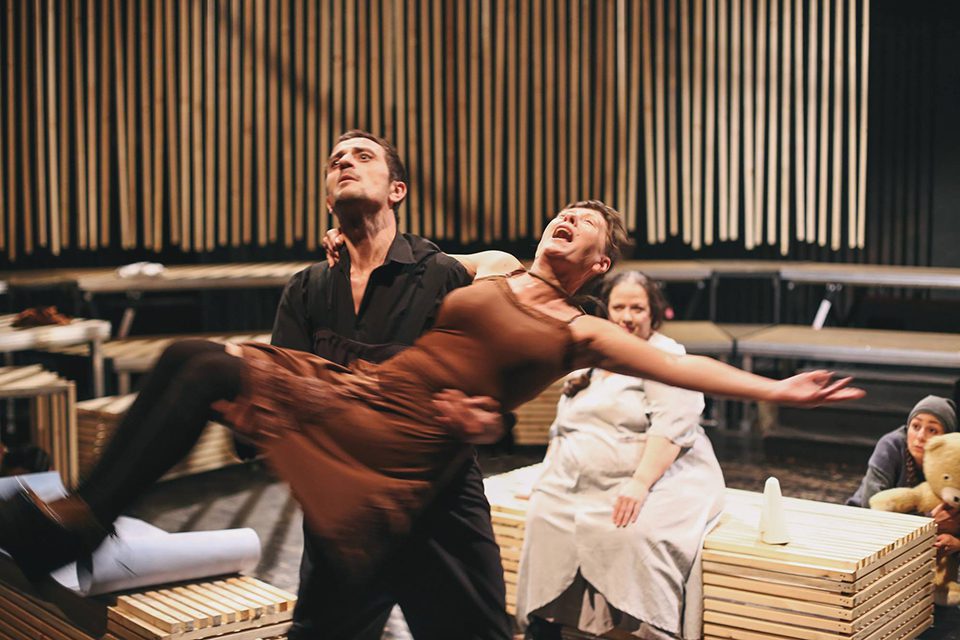
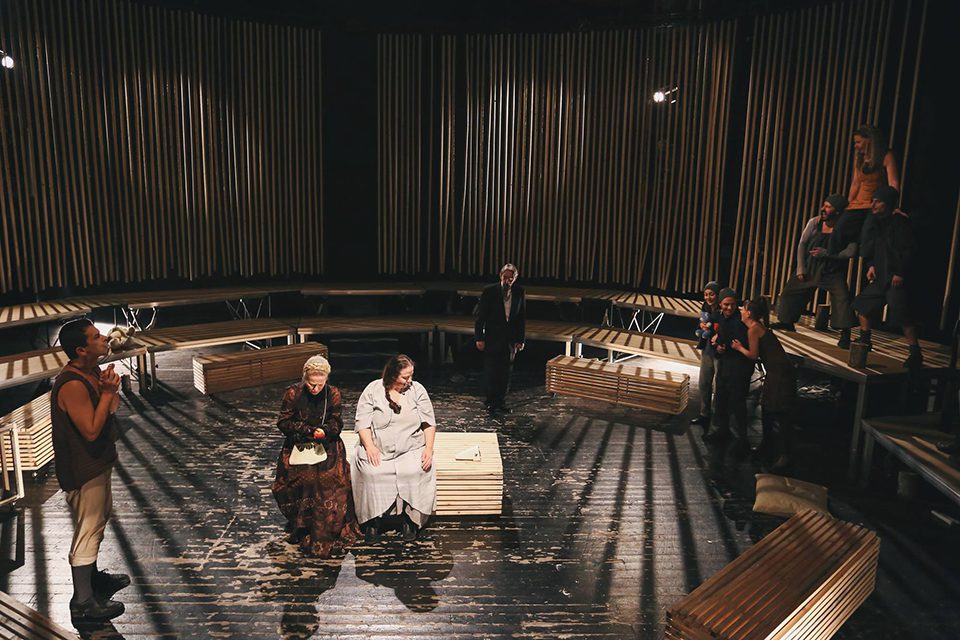

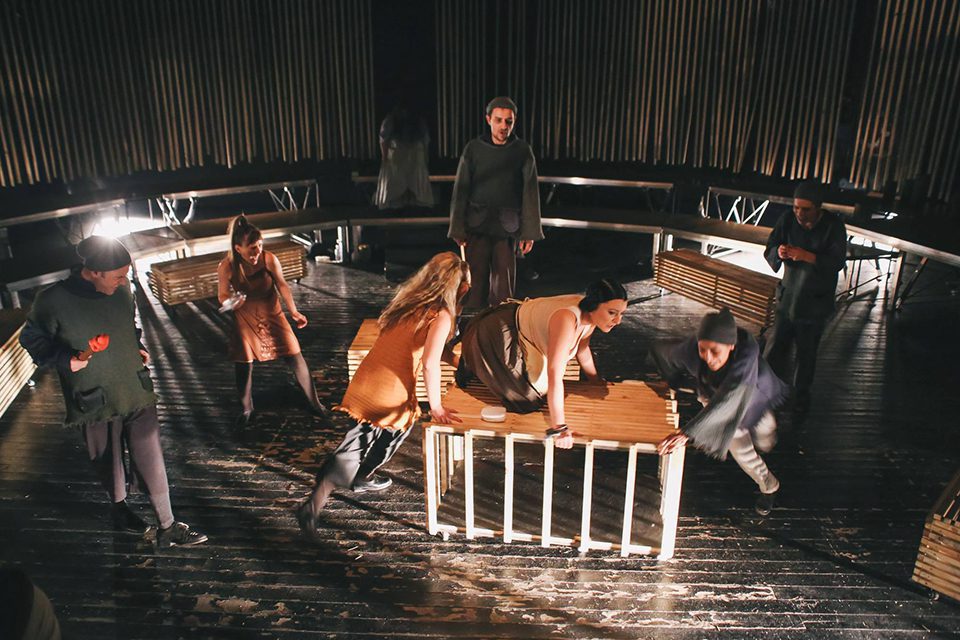

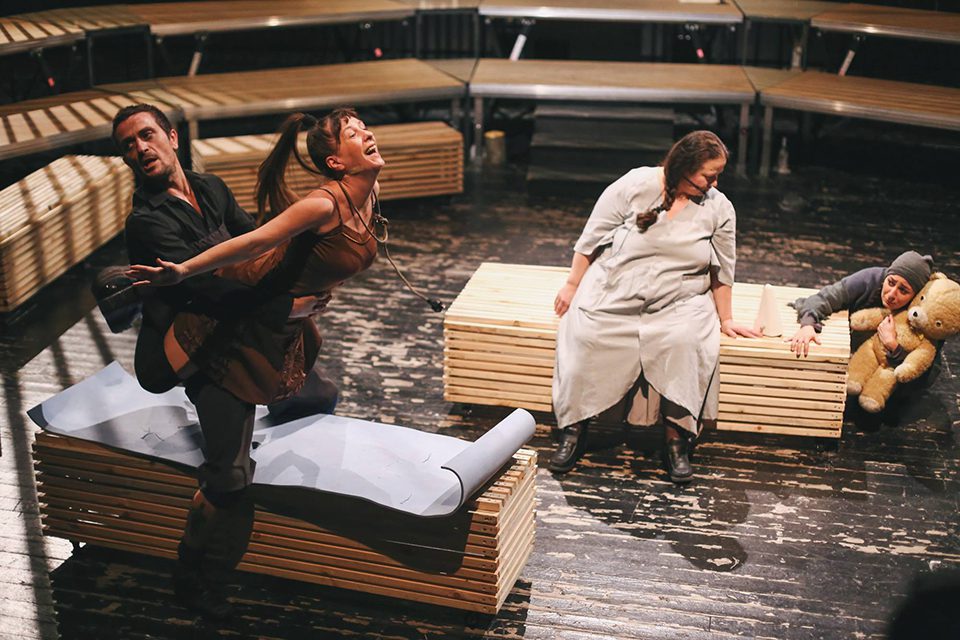
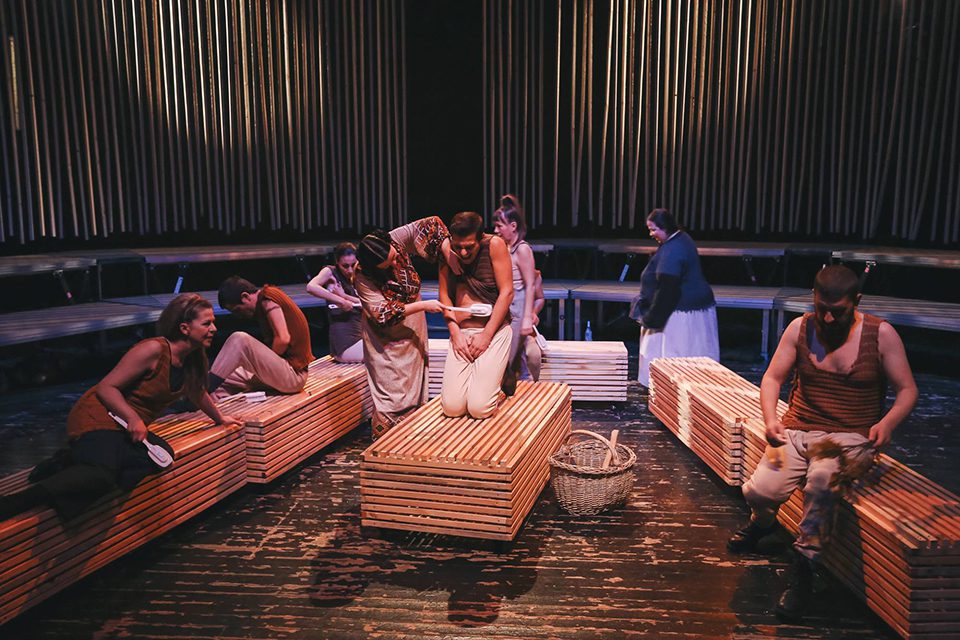

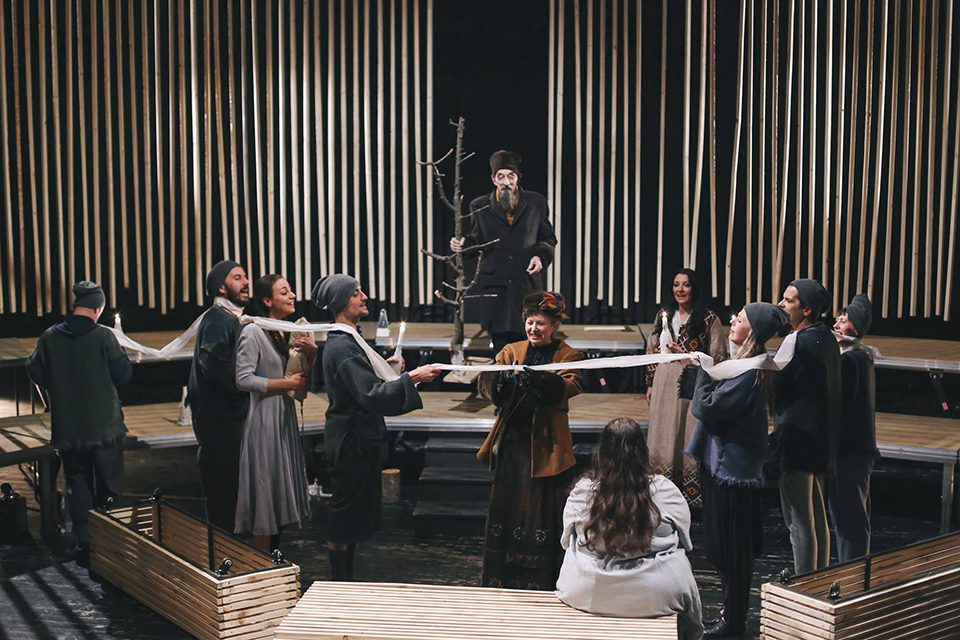
The author: Alexander Vedenski
Direction: Angel Star
Assistant Director: Jovan Ristovski
Translation from Russian: Olivera Pavlovic
Scenery: Valentin Svetozarev
Costume design: Blagoj Micevski
Muzika: Marjan Necak
Dance consultant: Jagoda Dimovska
Light: Igor Micevski
The play uses materials from the works of F.M. Dostoevsky "Crime and Punishment", "Young Man" and "Idiot".
Inspector: Mitko Ivanovski
Caper: Gordana Mihajlovska
Premiere: 14.11.2015
Roles:
Puziryova's mother: Menka Boyadzieva
Father Puzirjov: Boris Chorevski
The nanny nanny: Ilina Chorevska
Quince: Elena Moshe
Misha Pestrov: Ivan Jerchich
Sonja Islands: Sonja Oshavkova
Volodja Komarov: Borce Djakovski
Nina Serova: Juliana Mirchevska
Pet: Aleksandar Kopanja
Varja Petrova: Maria Djakovska
Baby: Petar Spirovski
Supervisor/police officer/judge: Aleksandar Stefanovski
,,To speak abstractly is quite easy, but to explain reality in words is very difficult" – Zen master Kyosei.
We were all children once… all will be born and be children someday, And all of them will remain children. Children under one sun, Children on a country planet, children of one creator. The division of large and small, to the rich and poor, Black, Jolt or white, Smart and stupid, The gods and ungodly, Beautiful and ugly, Powerful and powerless, Old and young, for life is always life, Death is death, Experience is an experience, Man is always human - as it is.
Man has two sides - dark and bright. Most often afraid to face or accept the darkest side in itself and in vain fights, but when he accepts her, then it becomes powerful and moves to the light.
We cannot be older than the children written by the author Alexander Vedenski, So would only live in the illusion that we are larger than the sun, The country, Heaven… or at least to be aware that just when we think we are great, Those are our ego-situation, and they are best identified in the games. Life is a game. What role we play?
,,Kozarev or Donarev?“ (How to say a.Vvedenski) Kozarev tells Dukarev this, Donarev tells Kozarev what, Kozarev on… - Permanent squabbles, What, in the end, end up in blood.
Fear of many games appears, and the biggest fear is to get rid of them and to become anything on the life scene.
E is a game, And we constantly complicate and complicate it…
For while we live, We expect something from life in vain, Life happens in living. And it doesn't recount, but is experiencing. The same as death. Sensation.
What about prejudice, The assumptions, the charges, intrigue, the condemnation of others' lives? Compared to fear, They are nothing. Compared to the size of the sun, are also nothing. Just compared to your, Personal life - are something. Does that mean that you are bigger than the sun itself? Not. You can only be an absurdly comical and when you are the most phalous with your attitude, and the greatest in its pain, For it is a game, where you need to fight the sun. You will win? I don't know. I only know that the sun beats the dark, but even without the darkness, There would be no light. It, and how will it be, I don't know again.
I think we humans are the loggers of ourselves, and the biggest absurd is that almost every person would like to have a Christmas tree, (,,its own Christmas tree ”or ,,ribbon “… or ,,turtle ”), And even more, she is for Christmas. Here we are at least all equal and with that dream and we will die.
Angel Star
***
The play "Christmas tree in Ivanov" by Alexander Vendenski is one of the most important works of the Russian avant -garde. In the style of this celebrity artistic direction since the beginning of the 20th century, which is defined as the poetics of opposition, that is, to challenge the traditional, classic forms and content in art and in the social view of the world, Ventenski's play offers a new stylistic-structural conception in building a drama work, A new "amazing dramaturgy", where the emphasis is on the one -on -reception of the world - its perceiving from a new corner, In order to change the old art code and radically influence the social taste.
With a new philosophical view of the world, who gives up the reasonable, ie. the logical understanding of the world, he applies poetics to the incredible: a blend of stylistics of infantile naivety, inspired by Russian folklore, and the ultimate absurdity, nonsense, that requires a higher sense than that in traditional-logical texts and the "normal" actions they express.
For this purpose, Realizing the idea of avant -garde literature to release language from the usual standards and norms of expression, Insendants explores new links between words, so there are many examples of semantic link disorders in the text. Disorders of the meaning of the play and syntactic invoice, ie. the phonetic and meaningful means that create a sense of "anogenicity" of the text - are the norm of his language. They are, on an example, the constant shift of conversation, which discolorses the course of the dialogue, or cases of the anogical union of various replicas, that provide only an apparent unity, dialogues, fully constructed on Opts etc..
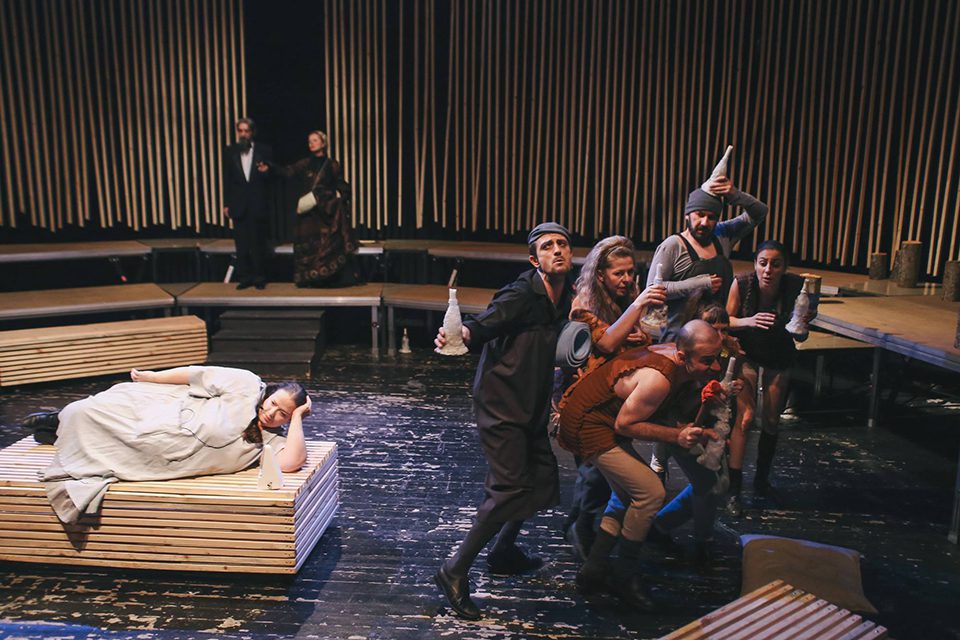
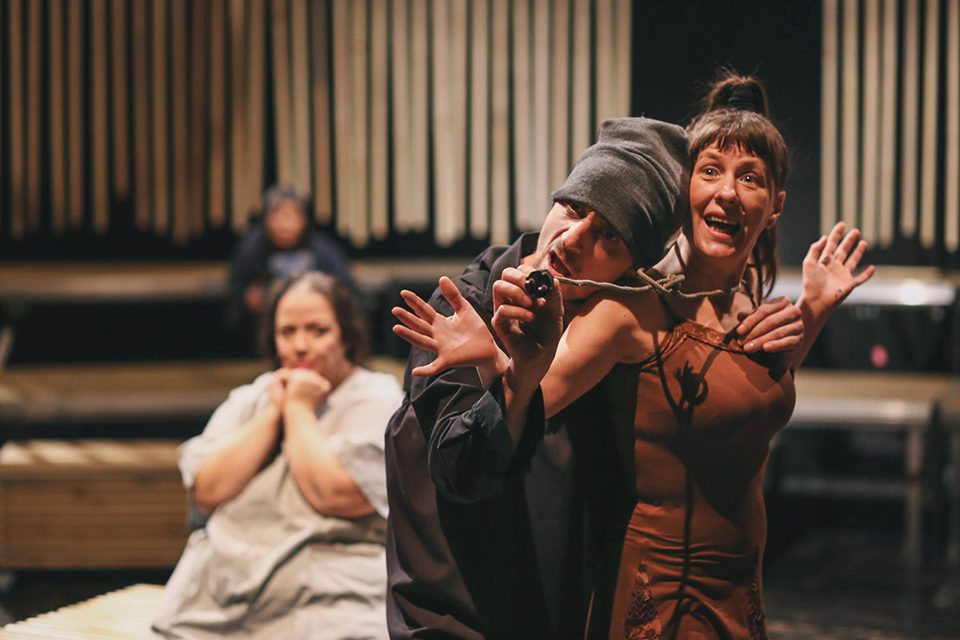
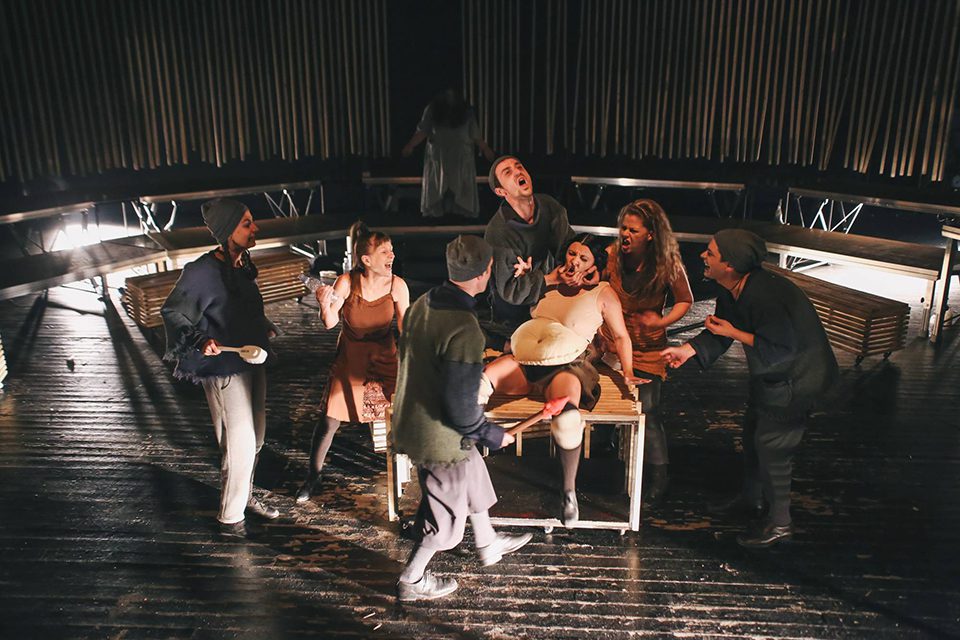
With such a language, to which the laws of everyday speech and thinking do not apply, creates a world that shows the viewer in an unusual, inverted form, in which the hierarchy and system of traditional values are disrupted. In this "family" history, children of 1 to 82 years, A nanny that kills a child, parents celebrating at times of death… and everyone dies one after another. Insendens uses death as a philosophical-aesthetic category that allows us to be out of time. Like that, A process that represents the ultimate expression of man's breakup as an entity/whole, it leads us to recovery, resurrection of personality in a new sense. The absurd in the art space created is a way to get to the discovery, which helps the lost inter -entrepreneurial and interpersonal relationships. Time, Death and God are the main topics of Vedvenski in this paradoxical scatter, which sounds like a life -longing before death, festive and tragic at the same time.
Applying this radical aesthetic procedure, which leads to the anogenicity of the Saline, Depersonalization, absurdly shaping situations, Black humor and metaphysical philosophy, Insendant becomes a harbinger of one of the most important phenomena in theatrical art - the famous Western theater of the absurd.
Olivera Pavlovic